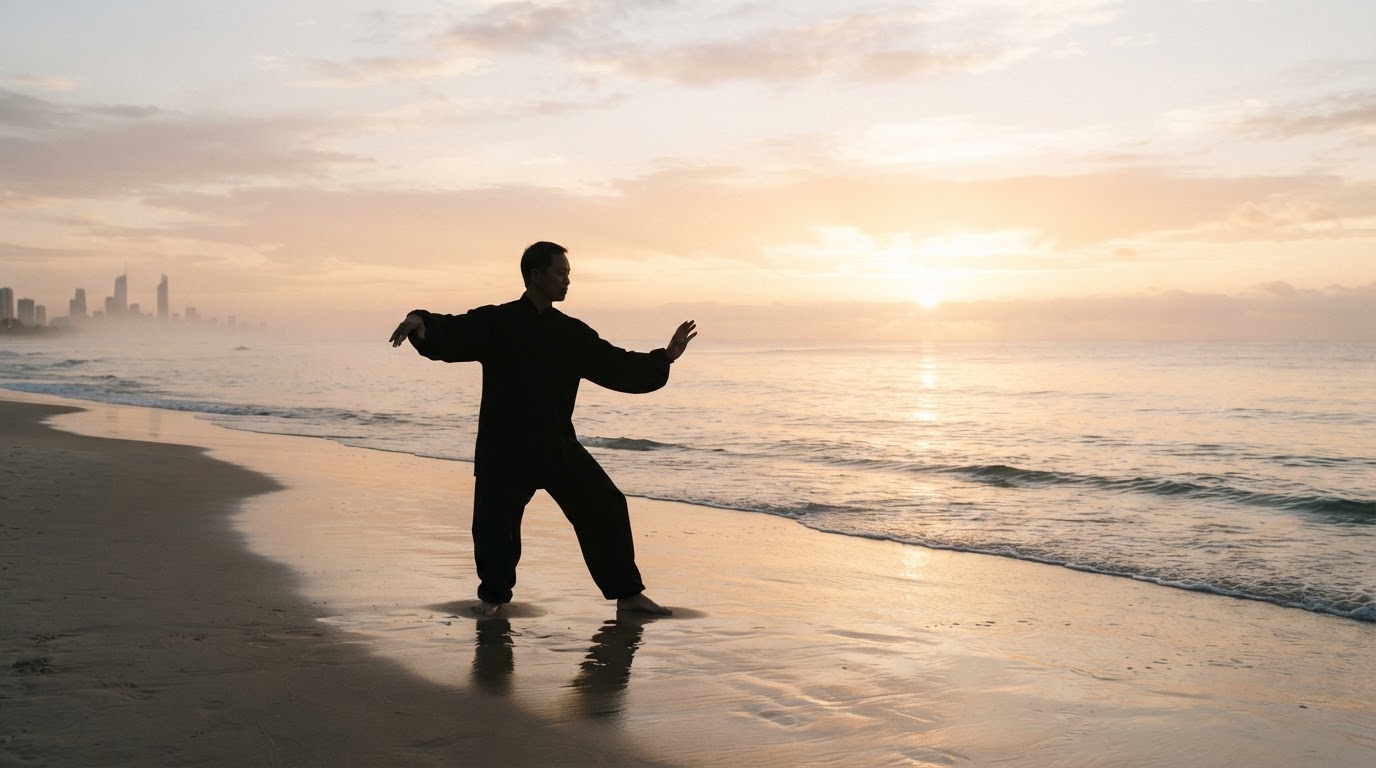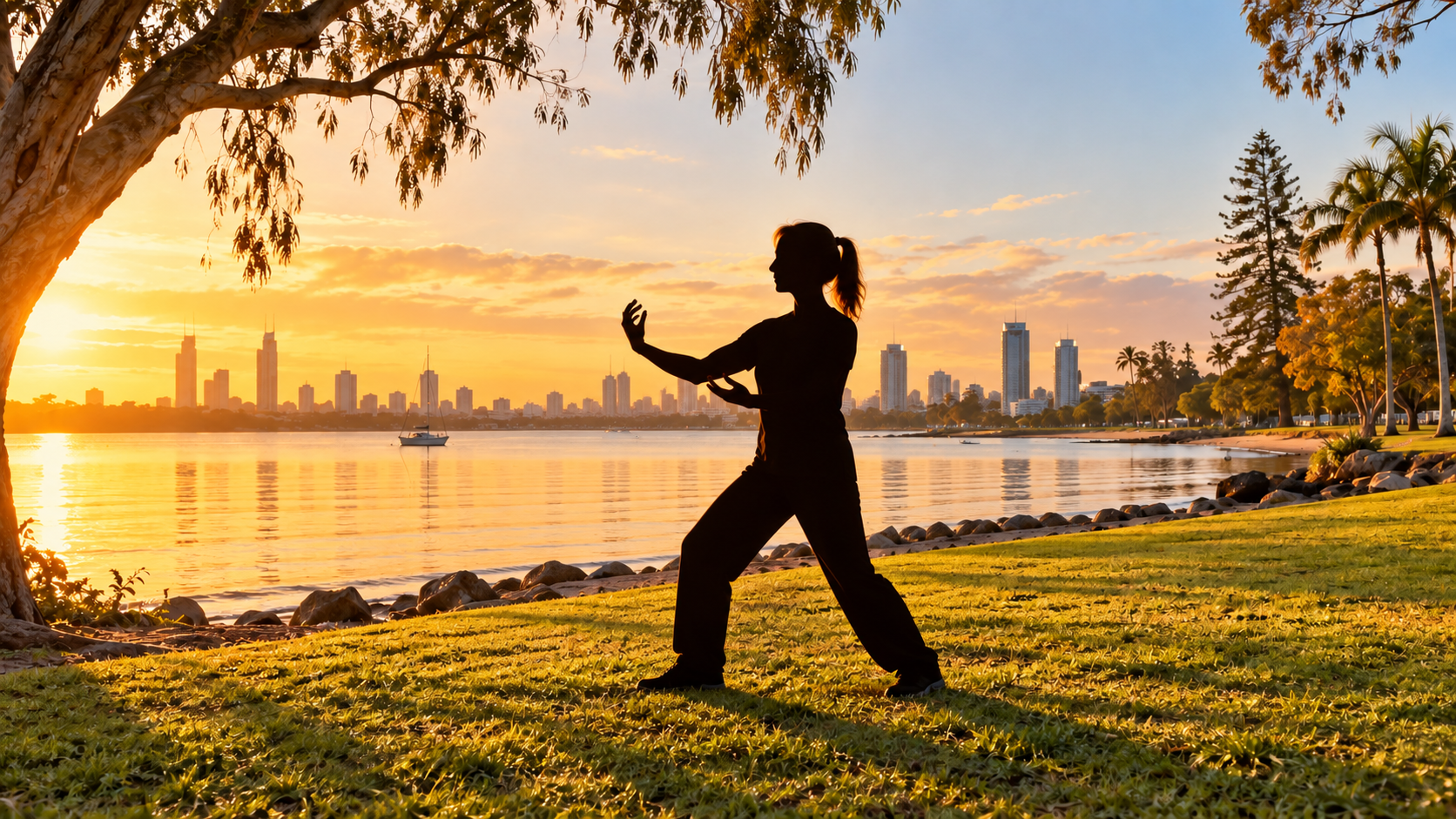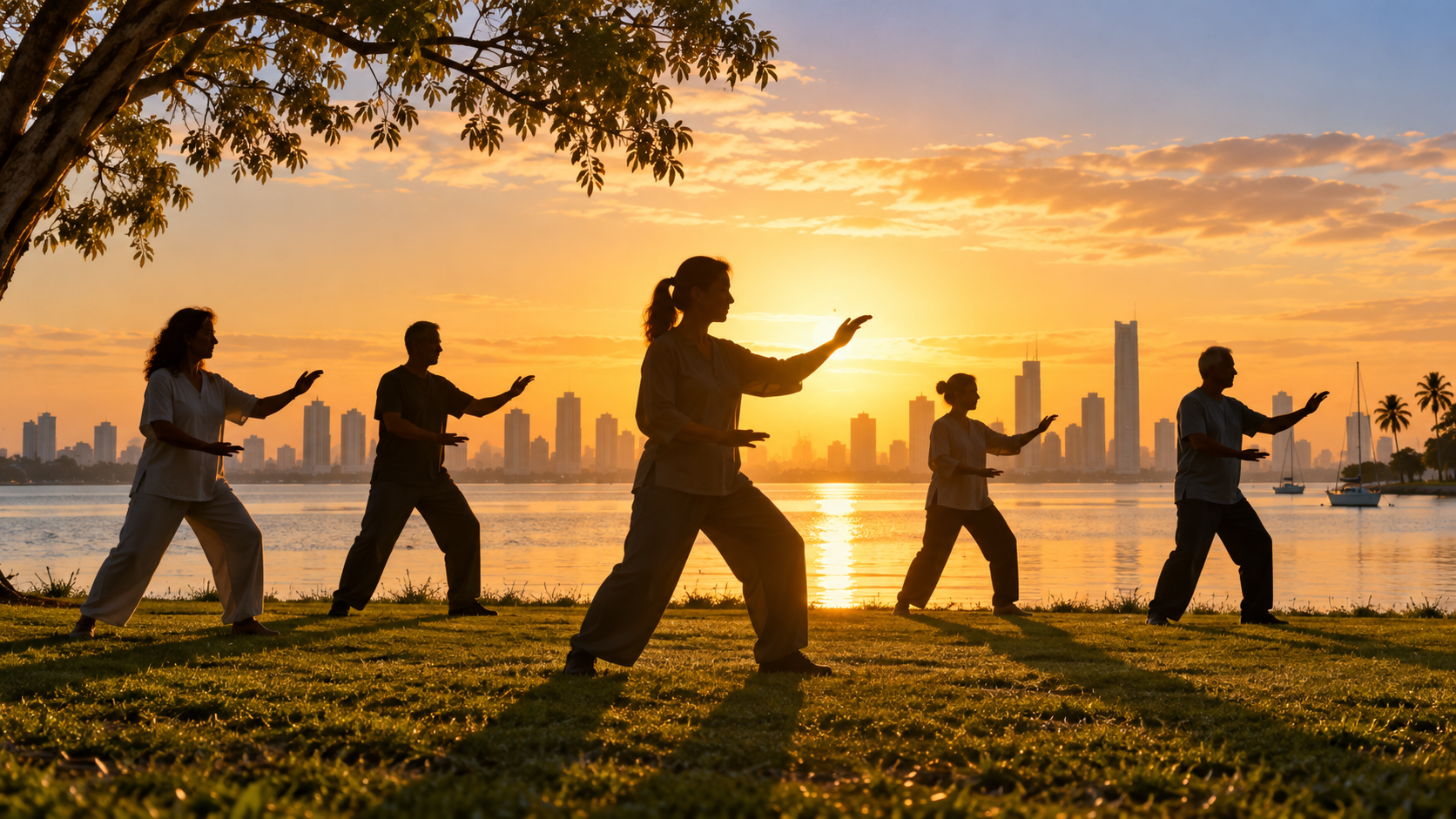
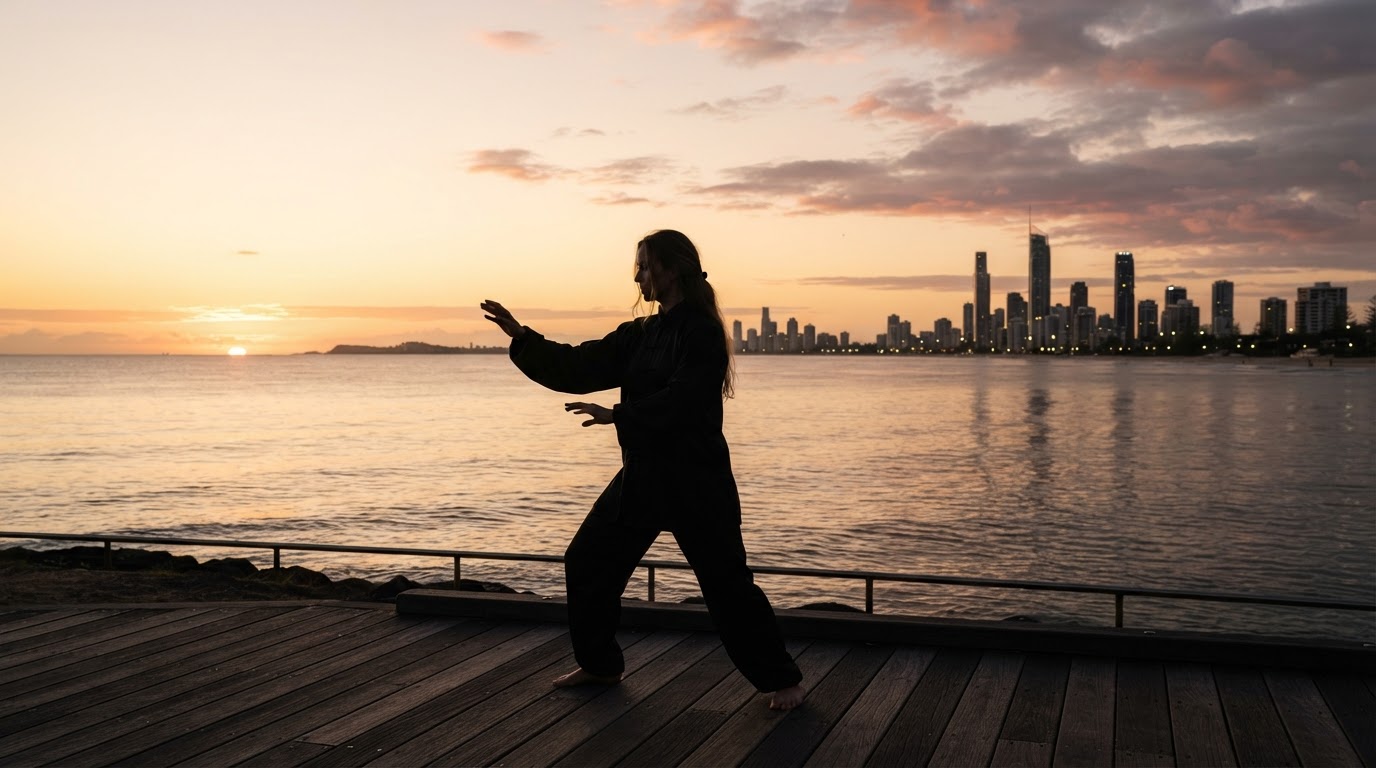
Watch someone practising Tai Chi and you will probably notice the pace first. Their arms trace gentle curves, their weight shifts gradually, and one movement seems to unfold into the next.
If you are used to activities where the aim is to move faster or finish sooner, that unhurried approach can seem unusual. Why take so much time over a single step?
For anyone thinking about trying our local Tai Chi classes on the Gold Coast, understanding the purpose of slow practice is a useful place to start.
Slowing down gives you something to notice
When you rush through an unfamiliar movement, it is easy to focus only on reaching the final position. Moving slowly gives you more opportunity to notice how you get there.
Where is your weight resting? Are your shoulders raised? What happens to your posture as you turn? How do your arms and legs move together?
These are details you can explore during Tai Chi practice. A movement that looks simple from the outside can contain plenty to pay attention to.
The transition matters as much as the pose
A photograph captures one moment in Tai Chi: a lifted hand, a turn or an extended leg. But learning the practice involves more than reproducing those individual shapes.
Consider a step. Before placing your foot, you need to organise your weight so that you can move it. Once the foot is placed, the next part is transferring weight into the new position.
Practising slowly gives you time to explore that sequence. Instead of jumping between finished poses, you begin learning how the movements connect.
Slow movement is still active learning
An unhurried class does not mean there is nothing to do. You may be listening to an instruction, watching a demonstration and working out how to apply it to your own movement.
As a beginner, that can be plenty to take in. It is normal to focus on your feet and temporarily forget what your hands are doing.
You do not need to understand every detail immediately. Start with the instruction in front of you and ask questions when something is unclear. Familiarity develops through returning to the practice.
Is Tai Chi always slow?
Not every Tai Chi style or training method uses the same pace. Tai Chi is a martial art, and its wider practice can include different speeds and ways of training.
The slow, flowing sequences people commonly associate with Tai Chi are one part of that broader picture. When choosing a class, ask which style is taught and what a typical session involves.
That conversation helps you understand whether the class matches your interests, rather than relying on a short video or photograph to tell the whole story.
You do not need impressive poses to get started
Images of Tai Chi sometimes show deep stances or high kicks. Those photographs capture a particular person performing a particular movement; they are not a checklist for your first lesson.
When enquiring about a beginner class, ask how movements are introduced and whether the format suits your current experience and movement requirements.
The aim of starting is to learn. You can bring curiosity without expecting yourself to look like an experienced practitioner.
Discover Tai Chi on the Gold Coast
If the idea of slowing down and paying closer attention to movement appeals to you, a local class is a practical way to explore it.
Our Gold Coast Tai Chi classes give you an opportunity to discover the practice and ask questions about learning. Contact us to find out about available sessions and where to begin.
Class details
Class location: [Insert venue and suburb] Class times: [Insert days and times] Enquiries and bookings: [Insert phone number or booking link]
Curious about Tai Chi? Get in touch and find out about your first class.
Ready to try Tai Chi?
Get in touch to learn more about our local Gold Coast classes and find out how to attend your first session.