
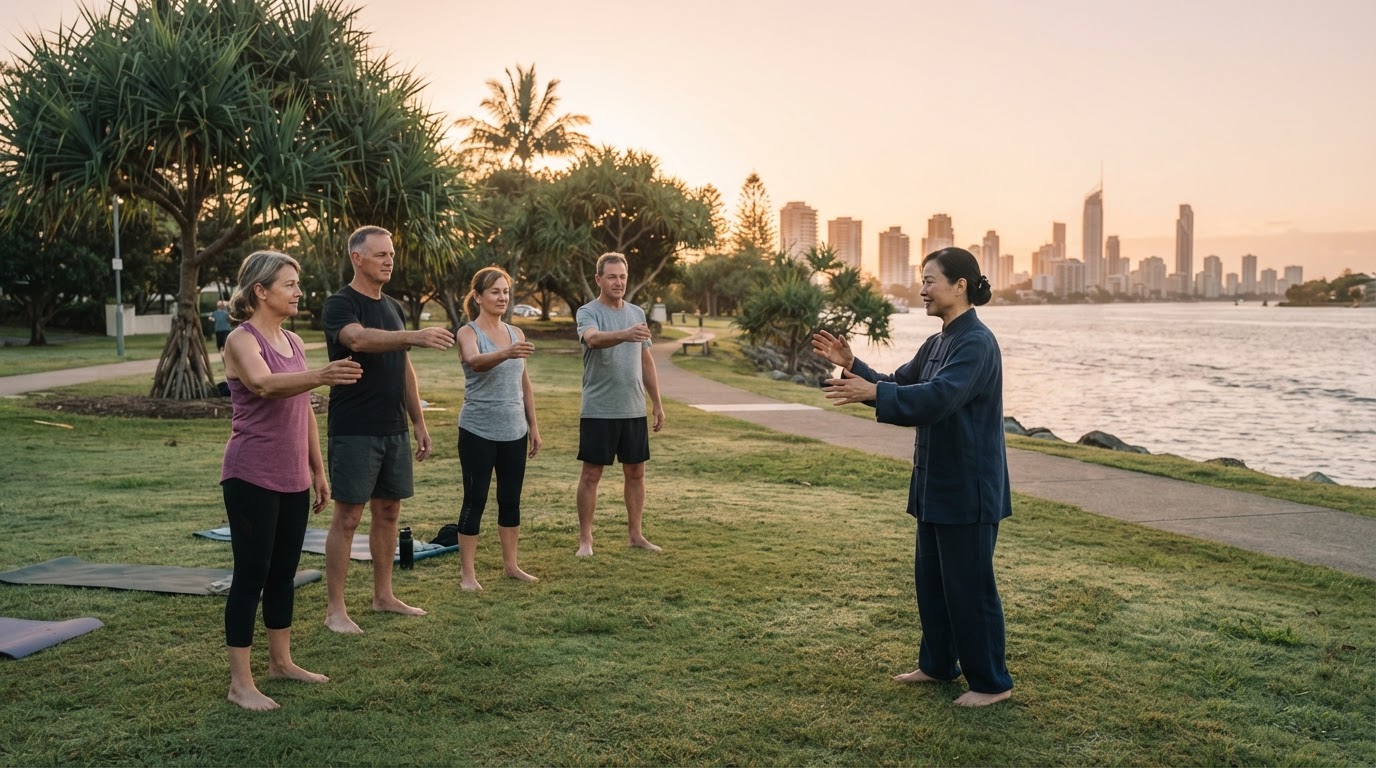
A Tai Chi video can make the practice look inviting. You can watch at home, pause a demonstration and explore an unfamiliar activity without organising a trip anywhere.
But when you stand up and try to follow, questions may appear. Which foot is carrying your weight? Are you turning the same way as the teacher? What should you do when a movement does not feel suitable?
If you are deciding between learning online and attending a Tai Chi class on the Gold Coast, consider how each format handles the things you need from a lesson.
Online learning comes in different forms
An online class might be a short public video, a structured recorded course or a live session with an instructor. Those experiences are quite different.
A recorded demonstration lets you replay material, but it cannot respond to your questions. A live online lesson may offer interaction, depending on the group size, camera setup and teaching arrangements.
Before signing up, check what is included. Find out whether you receive instruction, opportunities for feedback or simply access to demonstrations. The word “online” alone does not tell you how much teaching support is available.
Consider how you prefer to ask questions
When learning an unfamiliar movement, you may not know exactly what you have misunderstood until someone explains it another way.
In a local class, you can ask the instructor to clarify a step or demonstrate from another angle, following the session’s arrangements for questions. You may also hear an explanation prompted by another student’s question.
Some live online classes provide similar opportunities, while recorded lessons require a separate way to seek clarification. Ask how questions are handled and whether individual feedback is part of the format.
Think about what the teacher can see
Following a movement and receiving feedback on your version of it are different experiences.
An in-person instructor can observe you directly, although the amount of individual attention will depend on the class. Online, visibility depends on whether the session is live and how much of your movement the camera captures.
If choosing a live online option, ask about camera positioning and available space. If choosing a local group, ask how the instructor supports beginners and checks their understanding.
Neither format automatically guarantees personal guidance. Look at the actual teaching arrangements.
Match the format to your practical circumstances
Online learning removes the journey to a venue and may offer more flexibility. However, you still need a suitable space, a stable surface and a clear view of the instruction.
A local class provides a scheduled session and an established practice location. It also requires travel time and a timetable that fits your week.
Think about what you are realistically likely to attend or use. A course available at any time can still go unwatched, while a class across town may be difficult to reach consistently. Choose around your everyday circumstances rather than an ideal schedule.
Decide whether learning with others appeals to you
An in-person class brings you into a shared space with other participants. You can become familiar with the group, ask about the lesson and have a conversation before or after practice.
Online formats vary. Some live groups include discussion, while recorded courses are largely independent experiences.
If meeting people locally is part of your reason for trying Tai Chi, ask about the atmosphere and arrangements of the Gold Coast class you are considering. If you prefer learning privately, explore what support is available within an online option.
Check that the material suits a beginner
A polished performance is not necessarily a beginner lesson. Look for explanations of the movements and a clear description of the intended experience level.
Whether learning online or locally, ask which style is taught, how the material progresses and what prior knowledge is expected. Discuss any movement limitations or access requirements before committing to a course.
Avoid assuming that a session will be suitable simply because the movements look slow. The details of the instruction and practice matter.
The two approaches can complement each other
You may decide to attend a local class and use your instructor’s recommended resources between lessons. A video that matches the material being taught can give you a reference for practice, provided you understand the instructions.
Ask before adding unrelated tutorials. Different styles and sequences can introduce details that are confusing when you are still becoming familiar with your class material.
If you are unsure about something you practise at home, bring the question to your next lesson rather than guessing.
Explore our Gold Coast Tai Chi classes
If you would like to experience learning in a local group, contact us to ask about our current Tai Chi sessions. We can explain how classes are taught, what beginners can expect and how to get started.
Class details
Venue: [Insert venue and suburb] Class times: [Insert timetable] Enquiries and bookings: [Insert phone number or booking link]
Find a way to learn that suits you. Enquire about our Gold Coast Tai Chi classes today.
Ready to try Tai Chi?
Get in touch to learn more about our local Gold Coast classes and find out how to attend your first session.