
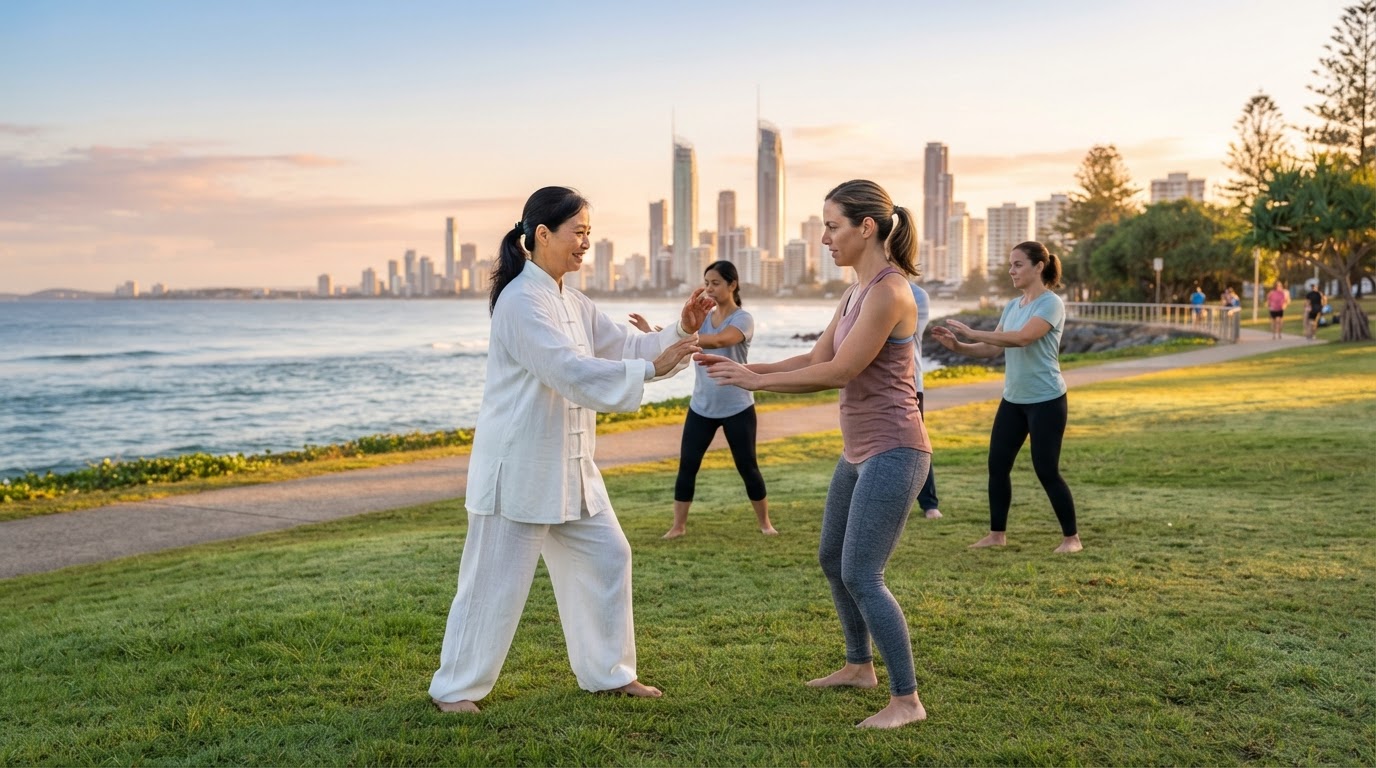
Once you have attended a few Tai Chi lessons, the venue and faces may start to feel familiar. You recognise some movements and have a better idea of how the session runs.
But you may also begin wondering what to focus on next. Should you be remembering more of the sequence? Practising longer? Asking different questions?
Getting more from a class does not always mean adding more material. It can mean making better use of the instruction already available. Here are practical ways to approach your Tai Chi lessons on the Gold Coast with a clearer sense of what you are learning.
Bring one useful question
Before your next lesson, think about a moment from the previous session that you did not quite understand.
Perhaps a turn felt confusing, or you were unsure when to shift your weight. Turn that uncertainty into a specific question: “At what point does the back foot move?” or “Which direction should I be facing here?”
Ask at an appropriate moment, following the instructor’s arrangements. One clear question can give you something practical to work on, without needing a lengthy discussion about the whole sequence.
Ask what deserves your attention now
Tai Chi movements can contain more detail than you can comfortably focus on at once. Trying to adjust your feet, hands, posture and timing simultaneously may leave you unsure whether anything is becoming clearer.
Ask the instructor which aspect matters most for your current stage. Use that guidance to give your practice a manageable focus.
You are not ignoring the other details permanently. You are establishing a clear starting point and letting the teacher guide what comes next.
Watch the transitions as well as the finished positions
When watching a demonstration, it is easy to concentrate on the shape at the end: where the hands finish or which way the body faces.
Also notice how the instructor gets there. What happens before the step? When does the turn begin? How does the next movement follow?
If the connection is unclear, ask to see that section again. Understanding the transition can answer questions that copying the final position alone leaves unresolved.
Check your interpretation of feedback
An instruction may sound straightforward but leave room for misunderstanding. Rather than assuming you have applied it correctly, ask the instructor to check when there is an opportunity.
You might say, “Is this the adjustment you meant?” or briefly explain what you understood. That gives the teacher a chance to clarify before you keep repeating the movement.
Use their feedback as a direction for learning, rather than a judgement on whether you are good at Tai Chi. The purpose is to make the instruction clearer and more useful.
Keep a short record of what you are exploring
A few words after class can help you remember the focus of the lesson. Write down a cue, a question or a section the instructor suggested revisiting.
Keep it brief. You do not need to produce a detailed diary or describe movements you do not yet understand.
For example, “Ask about the foot position after the turn” gives you a useful reminder for next time. If the instructor supplies notes or other resources, ask how they relate to the material you are studying.
Notice progress beyond remembering the order
Recalling the sequence is one part of learning, but it is not the only thing you can reflect on.
You may understand a previously confusing explanation, recognise where you lose your place or become more precise about the help you need. You might also find that a familiar movement raises a new question as you study it more closely.
Discuss those observations with the instructor. They provide a more useful starting point than comparing your performance with someone whose experience is different from yours.
Explain when your circumstances change
Let the instructor know if a change in your availability, movement requirements or access needs affects how you participate.
If you have missed lessons, ask what material you need to revisit. If home practice is difficult to fit in, be honest about that rather than setting a routine you cannot realistically maintain.
Clear communication helps you understand the options available within the class. It also avoids assumptions about what you have practised or which instructions you have already received.
Keep your reason for attending in view
You may have joined because you wanted a new interest, a regular group activity or the opportunity to study Tai Chi in detail. Those reasons can evolve as you learn.
From time to time, consider what you enjoy and what you would like to explore further. Share relevant questions with your teacher and find out how the class can support the next stage of your learning.
You do not need to rush towards a finish line to make a lesson worthwhile.
Explore our Gold Coast Tai Chi classes
Whether you are curious about your first lesson or looking to continue learning, contact us to ask about our current Tai Chi sessions on the Gold Coast.
We can explain the class format, available times and options for getting started.
Class details
Venue: [Insert venue and suburb] Class times: [Insert timetable] Enquiries and bookings: [Insert phone number or booking link]
Bring your curiosity and your questions. Enquire about our Gold Coast Tai Chi classes today.
Ready to try Tai Chi?
Get in touch to learn more about our local Gold Coast classes and find out how to attend your first session.